 Santease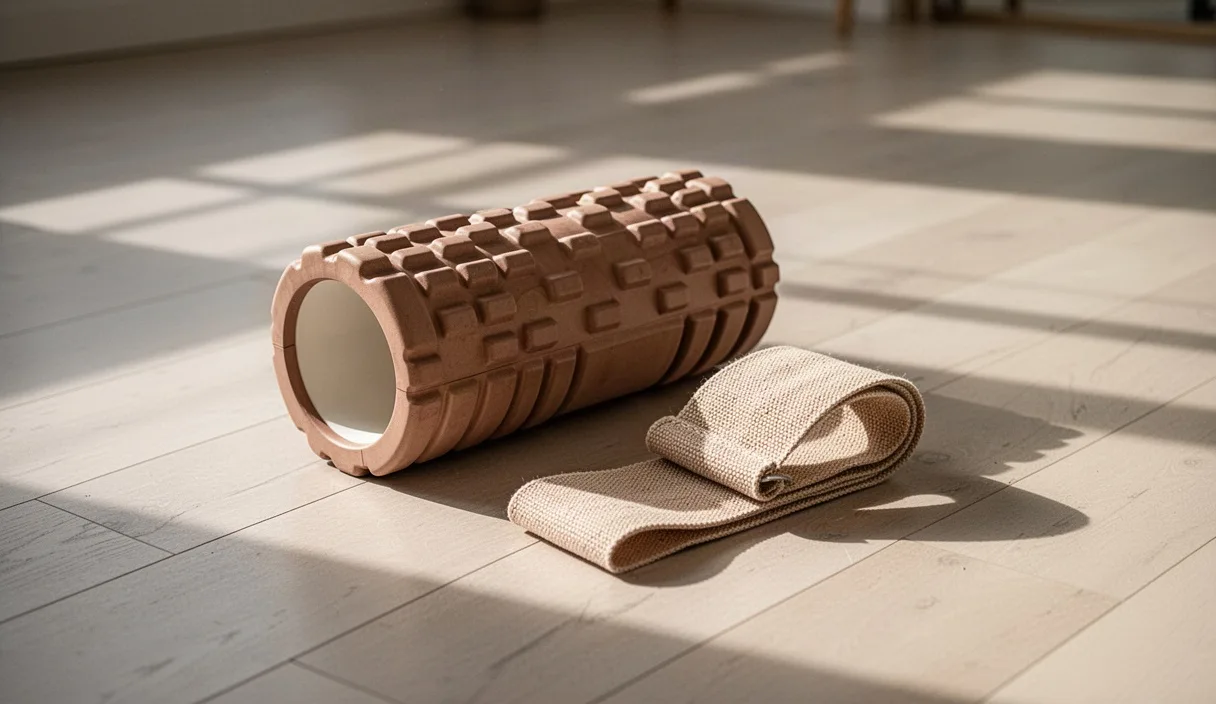
The rib cage protects vital organs. At the same time, it expands and contracts with every breathing cycle. When the tissues around the ribs lose their elasticity, movement becomes restricted. Inhaled air encounters mechanical resistance from the body itself.
Restoring thoracic mobility helps the lungs use the available space. Gentle stretches target the rib joints and intercostal muscles. Results do not come from intensity, but from regular, calm repetition.
Connection between thoracic mobility and breathing
Breathing is a mechanical process. The diaphragm moves downward during inhalation. At the same time, the ribs need to expand outward and upward. If the spine remains stiff, this movement stops prematurely.
Sedentary living keeps the chest in a flexed position for long hours. The shoulders round forward. The anterior ligaments shorten, and the intercostal muscles lose their natural length. The intake of fresh air decreases, without any actual damage to lung tissue.
The mobility of the costovertebral joints determines the depth of each breath. When the thoracic spine gains flexibility, the work of the respiratory muscles becomes easier. The heart and lungs operate under less strain throughout the day.
| Anatomical structure | Function at rest | Restriction from poor posture |
|---|---|---|
| Intercostal muscles | Rib stabilization | Shortening, lack of stretch |
| Costovertebral joints | Slight gliding during inhalation | Stiffness, reduced ease during full inhalation |
| Thoracic spine | Support and slight curvature | Hyperkyphosis, pressure on the diaphragm |
| Sternum | Elevation during inhalation | Downward restriction |
Side-lying intercostal stretch
The side-lying position isolates the ribs on one side. It allows body weight to assist in opening the intercostal space. This exercise requires only an exercise mat and a small pillow for your head.
Lie on your left side with your knees bent at a 90-degree angle. Keep your knees together to protect the lower back. Place your left arm under your head or extend it forward at shoulder height. Extend your right arm overhead, following the line of your torso.
- Body positioning: Lie on your side, with your hips and knees at a right angle.
- Arm extension: Bring the top arm over your ear, with the palm facing the floor.
- Breathing focus: Take a slow breath in through your nose for 4 seconds, targeting the right ribs.
- Exhalation and relaxation: Release the air passively for 6 seconds, feeling the weight of the chest.
- Cycle repetition: Stay in position for 8 breaths before switching sides.
During inhalation, imagine the air opening your ribs like a fan. There should be no strain in the shoulder. If the shoulder feels compressed, bend the elbow slightly. You should feel the stretch from your pelvis up to your armpit.
Repeat the process on the right side. Often, one side shows more resistance than the other. This asymmetry is normal. Do not push the tighter side further than it can handle without discomfort.
Thoracic spine extension with a foam roller
A foam roller provides targeted pressure along the vertebrae. Its diameter should be around 15 cm. Choose a roller with medium firmness. An overly hard roller can trigger a reflexive tightening of the paraspinal muscles.
Sit on the floor and position the roller behind your back. Slowly recline so that the roller supports the middle of your back, below the shoulder blades. Interlock your fingers behind your neck to support your head. Keep your elbows wide, but without straining.
- Keep your pelvis firmly on the floor throughout the entire exercise.
- Inhale calmly and allow your upper back to arch over the roller.
- Do not let your head fall backward freely. Keep your chin slightly tucked.
- Hold the position for 3 seconds at the end of the movement.
- Exhale and return to the starting neutral position.
Move the roller about two centimeters higher toward the shoulder blades and repeat. Never place the roller low on your lower back. The lumbar spine lacks ribs for protection, making such pressure dangerous. Keep the movement strictly between the bottom of the shoulder blades and the base of the neck.
Perform 5 repetitions at each of the three different spots along the thoracic spine. If you feel dizziness or noticeable popping, stop immediately. The goal is slow joint mobilization, not crackling noises.
Combining movement and deep inhalation
Stretching tissue is more effective when synchronized with your breathing rhythm. Inhaled air exerts internal pressure on the chest walls. This internal pressure expands ligaments from the inside out, while body movement works from the outside.
An effective exercise is the quadruped position with torso rotation. Place your hands under your shoulders and your knees under your hips. Weight is distributed evenly across all four points. Keep your spine in a neutral line.
Place your right hand behind your head, with the elbow bent. As you inhale deeply through your nose, rotate your torso to the right, driving your elbow toward the ceiling. Your gaze follows the elbow. The movement should stop where you feel a natural barrier, without twisting your pelvis.
Hold your breath at the highest point for 2 seconds. Feel your right lung fill completely with air. Exhale slowly through your mouth, returning the elbow toward the floor, close to your left wrist. Repeat 6 times on each side at a very steady pace.
The pace of the movement must follow your breathing. Do not move quickly while waiting for air. Move as slowly as it takes to inhale and exhale. This control also calms the sympathetic nervous system.
Exercise frequency throughout the week
Body tissues respond to consistency rather than the volume of a single workout. A short 12-minute routine is enough. It is better to perform the stretches regularly than to do one exhausting session per week.
For desk workers, the ideal frequency is 4 to 5 times per week. In the morning, the body is often stiffer due to nighttime immobility. In the afternoon, muscles are warmed up, but they have accumulated the strain of prolonged sitting. Choose a time that you can stick to consistently.
| Day | Session focus | Estimated time |
|---|---|---|
| Monday | Roller extension and side stretch | 12 minutes |
| Tuesday | Quadruped rotation with emphasis on inhalation | 10 minutes |
| Wednesday | Rest or gentle walking | - |
| Thursday | Full combination of roller and rotations | 15 minutes |
| Friday | Side stretch with prolonged exhalation | 10 minutes |
| Saturday | Gentle thoracic mobilization | 8 minutes |
| Sunday | Rest | - |
Pay attention to your body's signals. If you feel muscle fatigue, reduce the repetitions. The adaptation of ligaments and costal cartilage takes weeks. Changes in how breathing feels become noticeable after about 3 weeks of regular practice.
Common mistakes
The most common mistake is hyperextending the lower back. When the thoracic spine is stiff, the body borrows movement from the lumbar spine. This causes lower back pain. Always keep your abdominal muscles lightly engaged to protect your lower back.
Another mistake is holding your breath due to excessive effort. Many people clench their jaw and close their glottis. Stretching while holding your breath increases intrathoracic pressure and prevents muscles from relaxing. Air should flow without interruption, unless a short pause is specifically instructed.
Moving too fast cancels out the benefits. The rib cage needs time to adapt to the new position. Rushing a movement triggers the stretch reflex, causing contraction instead of relaxation. Every phase of the stretch should be smooth and controlled.
Finally, placing the foam roller directly on the neck or lower back is a serious technical mistake. The neck and lower back have natural lordotic curves. Applying pressure with a roller to these areas can compress nerves and discs. Keep the roller strictly to the rib cage area.
Next practical steps
Start today with the simplest exercise. Try the intercostal side stretch for 5 minutes before bed. Notice how your chest feels immediately afterward. A sensation of lightness is the first sign that your tissues are responding.
Incorporate the foam roller into your routine after two days, once you are comfortable breathing in the side-lying position. Keep a simple journal for two weeks. Note the days you exercised and any changes in your daily breathing pattern.
If you have a history of cellular vitality, rib fractures, a herniated disc, or chronic respiratory disease, consult a physical therapist or your doctor before starting. A healthcare professional can adjust the angles of movement to your specific physical needs.